Clearly, the answer is to develop some sort of differentiation, some unique quality that companies will value more in me than my fellow competing graduates. I received some advice from a friend recently: "to be the best at what you do, you have to love doing it." based on my recent studies in digital marketing, I think I've found my differentiator. Digital marketing has always been a fascinating topic for me, as it combines two job descriptions from opposite ends of the marketing spectrum: conceptual thinking and technical work. I love them both, and have a passion for mastering my interests as a progress through my career. In a sense, one of my career goals is to become a full stack marketer. My studies in digital marketing have been a great starting point for that journey.Not only did we cover a myriad of marketing topics in the course, we also obtained tangible digital marketing skills that increase our value in the eyes of prospective employers! At the close of the quarter here at Western Washington, I am compelled to reflect on my studies, synthesizing all of the skills that I have gained that qualify me to gain a position as a digital marketer!
 |
| The key to success in digital marketing is to branch out and learn all of its facets! |
One of the first subjects we covered was analytics (especially Google Analytics). Google Analytics is an excellent tool for evaluating and interpreting digital data at a very affordable rate (free!). In order to produce a search report, Google Analytics completes a four-step process, converting raw data into a finished product.
- Collection: every instance of recordable activity a consumer inputs upon page is accounted for by Google Analytics. All devices with the ability to internet search are registered by GA. Snippets of HTML code are inserted into page URLs to record bits of relevant data.
- Configuration and Processing: data is grouped together based on the parameters of a search. Once grouped, the data can be filtered according to search ,and render simple results pertaining to the search.
- Reporting: The results are formatted to streamline communication digestion for the average professional I. Reports often focus on KPI's like page views, length of time spent on site, and frequency of visitation.

I learned a lot from Google Analytics, and am now officially Google Analytics Certified! I can't wait to put my knowledge of analytics and my curiosity for web data to the test!
Another valuable skill I acquired in digital marketing is the ability to manage social media effectively and efficiently. The primary focus for any brand looking into social media marketing should be to deeply entrench themselves into online communities relevant to the product. When an understanding of the community is obtained, the release of relevant content is more effective in evoking engagement among the community. Once the nature of the content provided on social media has a solid direction, the next step for digital marketers is organizing the swath of marketing messages sent out to customers over various platforms. This undertaking requires a considerable amount of skill, so to qualify my obtained proficiency, I took the Hootsuite Certification exam.
Fundamentally, Hootsuite offers various content publication tools for marketers to organize content and analyze specific results. For example, Hootsuite offers a "stream" tool where marketers create "streams" or specific groups of consumers (in terms of demographics, psychographic, preference, etc.) where they can customize what content goes out to that group and through which platform. While social media marketing often focuses on being proactive with communication, it is also crucial to be skilled at take=ing reactive measures to solve real-time issues. Through Hootsuite, digital marketers can practice social listening, where the software keeps track of social media conversations regarding the brand, accounting for positive or negative sentiment. If the sentiment turns sharply negative in a short amount of time, the marketers are notified, often in time to craft a suitable response. In my time in digital marketing, I also obtained a certification as a Hootsuite Certified Professional!

 Throughout my experience in digital marketing education, HubSpot has been a massive contributor of educational content that has certainly provided valuable insight into some of the skills and practices involved with digital marketing. The mere fact that I am aware of and feel appreciation for the brand is a testimonial to the effectiveness of the concept of inbound content marketing. HubSpot's philosophy is that if a company invests in producing educational content relevant to the industry, without any publication bias, the consumer will be so appreciative of the content that they will align their loyalties with that company. What previously seemed like a risky investment is now generally accepted across the industry to be a valuable piece of digital marketing. Hubspot also taught me other important digital marketing concepts like creating a buyer persona through a mixture of data analysis and personal interaction with a segment. Creating a narrative about the ideal individual in a target market is a useful tool in designing content for that market. The end goal of the Hubspot inbound marketing process is to guide the consumer through the buyer's journey, providing relevant information appropriate for every level of increasing commitment. Progressing through to the next phase of my digital marketing education, I made sure to acquire the Hubspot certification as well.


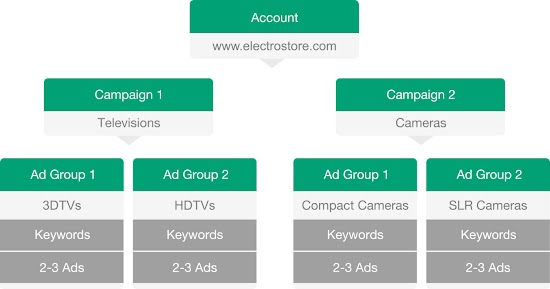
The final piece of my digital marketing education involves Google Adwords, and the system of commerce that surrounds it. The idea behind Google Adwords is all about optimization: optimize the ad content to be relevant and enjoyable for the consumer, optimize the consumer response to an ad, and optimize the general ad content that exists on the results page of a Google search. It's a win-win-win, the consumer wins, the businesses win, and Google wins-- if every component plays their role, that is. Basically, the way the Google Adwords ad buying system works is that there is a base algorithm that weighs the bid a company makes for ad space against the quality of the content within the ad. If the content is actually well structured and is relevant to the initial search, the ad is deemed to be of good quality, and ranks high. If the ad is not of high quality, then the highest bidder may not actually receive the highest search result, especially if another bidder produced a better ad. This system of advertising is really useful when paired with Google Analytics, where certain ad metrics can be tracked and evaluated over time to give companies insight into the effectiveness of their ads. In the next week, I plan to acquire a certification in Google Adwords as well, and I'll be continuing on my way to become a full stack marketer!
Another valuable skill I acquired in digital marketing is the ability to manage social media effectively and efficiently. The primary focus for any brand looking into social media marketing should be to deeply entrench themselves into online communities relevant to the product. When an understanding of the community is obtained, the release of relevant content is more effective in evoking engagement among the community. Once the nature of the content provided on social media has a solid direction, the next step for digital marketers is organizing the swath of marketing messages sent out to customers over various platforms. This undertaking requires a considerable amount of skill, so to qualify my obtained proficiency, I took the Hootsuite Certification exam.
Fundamentally, Hootsuite offers various content publication tools for marketers to organize content and analyze specific results. For example, Hootsuite offers a "stream" tool where marketers create "streams" or specific groups of consumers (in terms of demographics, psychographic, preference, etc.) where they can customize what content goes out to that group and through which platform. While social media marketing often focuses on being proactive with communication, it is also crucial to be skilled at take=ing reactive measures to solve real-time issues. Through Hootsuite, digital marketers can practice social listening, where the software keeps track of social media conversations regarding the brand, accounting for positive or negative sentiment. If the sentiment turns sharply negative in a short amount of time, the marketers are notified, often in time to craft a suitable response. In my time in digital marketing, I also obtained a certification as a Hootsuite Certified Professional!
Throughout my experience in digital marketing education, HubSpot has been a massive contributor of educational content that has certainly provided valuable insight into some of the skills and practices involved with digital marketing. The mere fact that I am aware of and feel appreciation for the brand is a testimonial to the effectiveness of the concept of inbound content marketing. HubSpot's philosophy is that if a company invests in producing educational content relevant to the industry, without any publication bias, the consumer will be so appreciative of the content that they will align their loyalties with that company. What previously seemed like a risky investment is now generally accepted across the industry to be a valuable piece of digital marketing. Hubspot also taught me other important digital marketing concepts like creating a buyer persona through a mixture of data analysis and personal interaction with a segment. Creating a narrative about the ideal individual in a target market is a useful tool in designing content for that market. The end goal of the Hubspot inbound marketing process is to guide the consumer through the buyer's journey, providing relevant information appropriate for every level of increasing commitment. Progressing through to the next phase of my digital marketing education, I made sure to acquire the Hubspot certification as well.The final piece of my digital marketing education involves Google Adwords, and the system of commerce that surrounds it. The idea behind Google Adwords is all about optimization: optimize the ad content to be relevant and enjoyable for the consumer, optimize the consumer response to an ad, and optimize the general ad content that exists on the results page of a Google search. It's a win-win-win, the consumer wins, the businesses win, and Google wins-- if every component plays their role, that is. Basically, the way the Google Adwords ad buying system works is that there is a base algorithm that weighs the bid a company makes for ad space against the quality of the content within the ad. If the content is actually well structured and is relevant to the initial search, the ad is deemed to be of good quality, and ranks high. If the ad is not of high quality, then the highest bidder may not actually receive the highest search result, especially if another bidder produced a better ad. This system of advertising is really useful when paired with Google Analytics, where certain ad metrics can be tracked and evaluated over time to give companies insight into the effectiveness of their ads. In the next week, I plan to acquire a certification in Google Adwords as well, and I'll be continuing on my way to become a full stack marketer!
Let's see.... what'd I miss?
I learned a lot more over the course of my digital marketing. I did blog about each of these subjects in depth, but here's a quick summation:
- Basic Proficiency in HTML/CSS
- Basic Proficiency in SQL database programming
- A/B Testing
- Contemporary Content Marketing
- UX/UI
- Search Engine Optimization (SEO)
- Email Marketing
- Search Engine Marketing (SEM)
- Programmatic Buying
- Native Advertising
- Platform Switching/Mobile Marketing
Perkins Workin's Statistics
Total Word Count: 16,634, or 48 pages in a Word Document
Total Page Views: 282
I'm pretty proud of this metric! I linked my blog to a few Facebook groups a couple times and got some extra hits. I also seem to cultivating a small but consistent base of Polish followers. I have no idea why, but there always seems to be a few Polish clicks for every post.
Most Popular Posts:
- Predictably Irrational: A Foray into SEM
- Social Media from Both Sides of the Coin
- I Can See Clearly Now.... Because of A/B Testing
- Technical Marketing II: the SQL
I have a theory that the SEM post was the most popular solely due to my referencing of the famous marketing book Predictably Irrational.
Well folks, that's all I have to say about that.... for now. I plan to continue this blog in the future, but for now, a little respite from all these Workin's.
Thanks for reading!
John Perkins